
 Tweet
Tweet
Trucking and Carbon Monoxide Awareness
Carbon monoxide (CO) is a highly toxic, colorless, and odorless gas that is produced through the incomplete burning of fuels such as propane, coal, wood, oil, kerosene, natural gas, and gasoline. In fact, one of the most common sources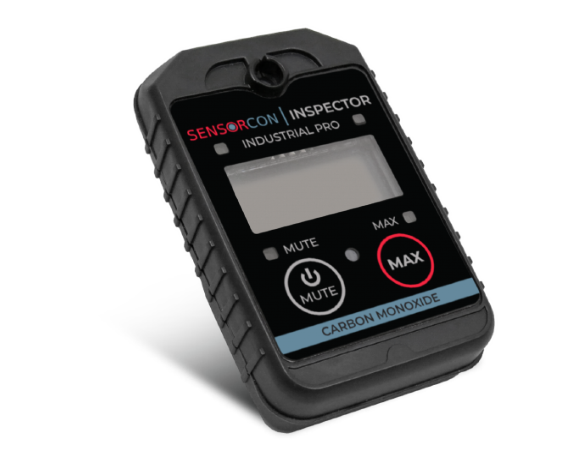

Truck engines can produce high concentrations of carbon monoxide (CO) quickly, overcoming exposed drivers before they realize they are at risk.
In fact, the Centers for Disease Control (CDC) notes that CO concentrations reach the Immediately Dangerous to Life and Health (IDLH) concentration in 7 minutes when a 5-horsepower gasoline engine is operated in a 10,000 cubic foot room.
Drivers affected by CO display a lack of reasoning caused by reduced oxygen to the brain that can impair function and make them less likely to discern the danger in the environment.
The Causes of Carbon Monoxide Exposure from Trucks
While many risks of carbon monoxide (CO) exposure stem from mechanical issues, there are a series of best practices regarding limiting CO exposure that should be considered when operating a motor vehicle.
In general, you should avoid:
NOTE: The catalytic converter is ineffective when there is insufficient oxygen in the area, which can occur in closed spaces like garages. Therefore, it is dangerous to leave your truck running in a garage, even if the garage is open.
If you are experiencing issues with carbon monoxide concerning your truck, you should immediately call a mechanic or service technician. If you suspect an issue, have your truck towed to the service garage to avoid exposure.
Your service technician can inspect your vehicle to diagnose and correct any problems due to faulty parts, improper maintenance, or other issues.
To learn more about the effects of CO poisoning, please review Understanding the Effects of Carbon Monoxide.
Using Carbon Monoxide Meters to Detect and Monitor Carbon Monoxide Levels
The Sensorcon Inspector is a trusted tool used by service technicians and motor vehicle operators for detecting and identifying the source of carbon monoxide leaks.
The Sensorcon CO Inspector is a portable and reliable carbon monoxide meter (CO meter) that was designed in the USA and assembled in our manufacturing facility located in Buffalo, NY.
The CO meter provides you with real-time readings all the way from 0 to 2000 PPM and is used by professionals to monitor or inspect for carbon monoxide.
Trusted by automotive service technicians, police, fire fighters, emergency medical services (EMS), home inspectors, plumbers, and HVAC technicians, the Sensorcon CO Inspector is a great tool for monitoring for and diagnosing CO leaks in the home or workplace.
Carbon monoxide (CO) is a highly toxic, colorless, and odorless gas that is produced through the incomplete burning of fuels such as propane, coal, wood, oil, kerosene, natural gas, and gasoline. In fact, one of the most common sources
Truck engines can produce high concentrations of carbon monoxide (CO) quickly, overcoming exposed drivers before they realize they are at risk.
In fact, the Centers for Disease Control (CDC) notes that CO concentrations reach the Immediately Dangerous to Life and Health (IDLH) concentration in 7 minutes when a 5-horsepower gasoline engine is operated in a 10,000 cubic foot room.
Drivers affected by CO display a lack of reasoning caused by reduced oxygen to the brain that can impair function and make them less likely to discern the danger in the environment.
The Causes of Carbon Monoxide Exposure from Trucks
While many risks of carbon monoxide (CO) exposure stem from mechanical issues, there are a series of best practices regarding limiting CO exposure that should be considered when operating a motor vehicle.
In general, you should avoid:
- Operating a vehicle with a defective exhaust system.
- Operating a vehicle with a defective emission system or poorly tuned engine.
- Inadequately ventilated passenger compartments.
- Driving a vehicle with holes in the body.
- Warming up a vehicle in a garage, even with the outside garage door open.
- Using auxiliary, fuel-burning heaters inside the vehicle.
- Operating vehicles in a garage, carwash, or any enclosed building.
- Idling your vehicle with windows open, or parking near other idling vehicles.
- An exhaust leak can allow escape of carbon monoxide before it is converted to non-toxic CO2 in the catalytic converter.
- The carbon monoxide leaking from the exhaust system can enter the vehicle through holes in the body or open windows or doors.
NOTE: The catalytic converter is ineffective when there is insufficient oxygen in the area, which can occur in closed spaces like garages. Therefore, it is dangerous to leave your truck running in a garage, even if the garage is open.
If you are experiencing issues with carbon monoxide concerning your truck, you should immediately call a mechanic or service technician. If you suspect an issue, have your truck towed to the service garage to avoid exposure.
Your service technician can inspect your vehicle to diagnose and correct any problems due to faulty parts, improper maintenance, or other issues.
To learn more about the effects of CO poisoning, please review Understanding the Effects of Carbon Monoxide.
Using Carbon Monoxide Meters to Detect and Monitor Carbon Monoxide Levels
The Sensorcon Inspector is a trusted tool used by service technicians and motor vehicle operators for detecting and identifying the source of carbon monoxide leaks.
The Sensorcon CO Inspector is a portable and reliable carbon monoxide meter (CO meter) that was designed in the USA and assembled in our manufacturing facility located in Buffalo, NY.
The CO meter provides you with real-time readings all the way from 0 to 2000 PPM and is used by professionals to monitor or inspect for carbon monoxide.
Trusted by automotive service technicians, police, fire fighters, emergency medical services (EMS), home inspectors, plumbers, and HVAC technicians, the Sensorcon CO Inspector is a great tool for monitoring for and diagnosing CO leaks in the home or workplace.